Are you thinking about buying and holding a rental property in North Potomac? It can be an appealing idea, but this is not a market where rough estimates and broad assumptions work very well. If you want to make a smart move, you need to understand local housing stock, rent levels, county rules, and recurring costs before you commit. Let’s dive in.
Why North Potomac attracts landlords
North Potomac sits in Montgomery County and has a housing profile that stands out from many rental markets. Census data shows a 2020 population of 23,790, an owner-occupied housing rate of 82.9%, and a median value of owner-occupied homes of $826,200.
That tells you two important things right away. First, this is a mostly owner-occupied community rather than a heavy renter market. Second, acquisition costs can be high, so your numbers need to work over the long term.
The area also reflects a higher-income household base. Census figures report a median household income of $186,514, a bachelor’s-or-higher attainment rate of 77.2%, and a poverty rate of 5.3%.
For a rental owner, that often points to a more selective renter pool and stronger expectations around condition, maintenance, and presentation. In other words, the property itself matters, and so does how well you operate it.
What types of rentals are common
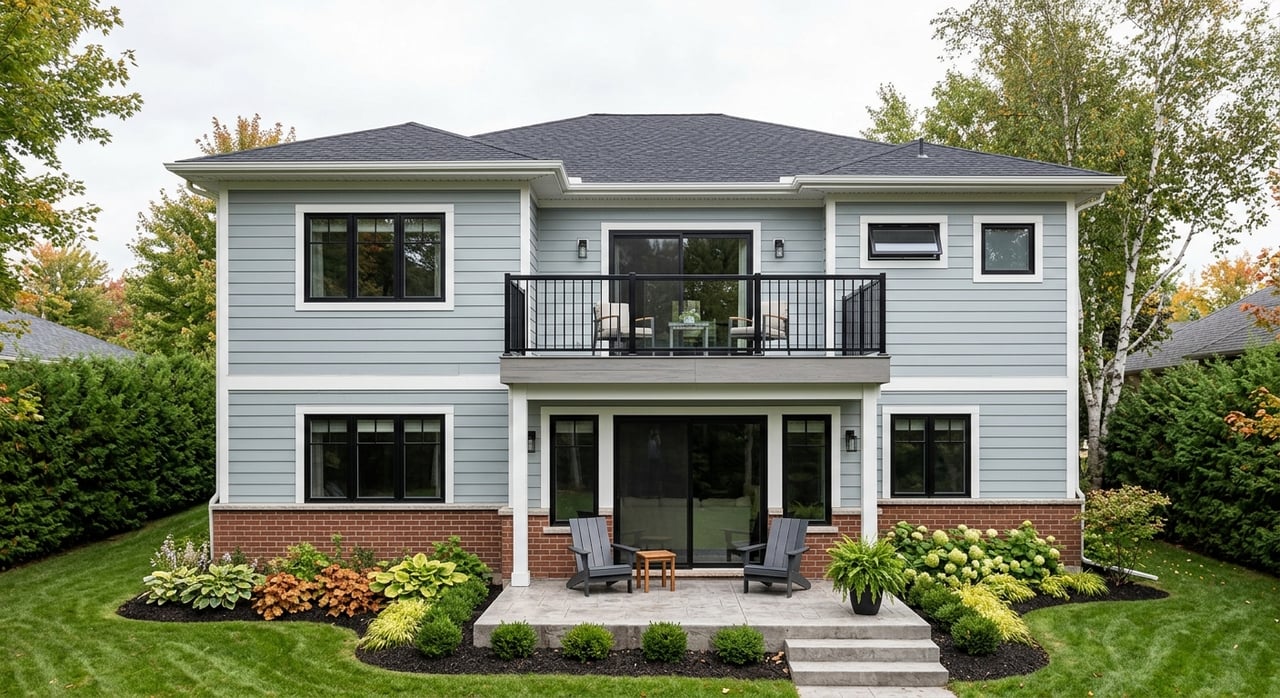
North Potomac is primarily a suburban house and townhome market. American Community Survey housing data shows that 67.1% of housing units are 1-unit detached homes and 23.4% are 1-unit attached homes.
By comparison, only 3.6% of units are in buildings with 20 or more units. That means if you are looking for an investment here, you are much more likely to be evaluating a detached home, townhouse, or smaller condo-style opportunity than a large apartment asset.
The age of the housing stock matters too. Much of the local inventory was built in the 1980s and 1990s, which can create opportunity, but it can also bring more maintenance planning into the picture.
If you are underwriting a rental property in North Potomac, it helps to think less like a large-scale apartment investor and more like an owner of a suburban resale home with tenant turnover, repair cycles, and county compliance requirements.
What rent looks like in North Potomac
Rent data in North Potomac should be read carefully because different sources measure different things. Census QuickFacts reports a 2020-2024 median gross rent of $2,413, while Zillow’s asking-rent snapshot shows about $2,850 per month with a wide range from $950 to $8,900.
These figures are not interchangeable. Median gross rent reflects occupied households, while asking rent reflects active listings at a point in time.
That distinction matters because your likely rent will depend heavily on the property type, size, layout, age, updates, and finish level. A renovated townhome and an older detached house may compete in very different slices of the market.
Zillow listings also show active rental inventory across apartments, condos, townhouses, and houses. For you, that means rental pricing strategy needs to be property-specific rather than based on a single area-wide number.
Why underwriting needs to be conservative
North Potomac can work as a rental market, but it tends to favor a buy-and-hold mindset. The combination of higher purchase prices, older housing stock, and county-level operating rules makes it important to underwrite conservatively.
A property may look attractive based on gross rent alone, but recurring ownership costs can change the picture quickly. Taxes, licensing, compliance, and repair reserves all deserve real attention before you buy.
This is especially true in a market where many likely rental properties are detached homes and townhomes. Those property types can offer strong appeal to tenants, but they can also carry larger maintenance exposure than a simpler unit in a larger building.
Know your Montgomery County tax picture
Property taxes are a major part of rental ownership costs in North Potomac because the community is in Montgomery County. For FY2026, the County Council set several real-property tax components, including $0.6742 per $100 for the general county, MCPS, and college levy, $0.0470 for the MCPS-only supplement, $0.0828 for transit, $0.1218 for fire, $0.0320 for recreation, and $0.1120 for the State property tax.
Montgomery County states that the bill is calculated by multiplying the applicable rate by assessed value. The exact amount depends on the parcel’s tax class and any special-district items.
That means two homes with similar asking prices may not carry identical tax burdens. Before you buy, it is worth reviewing the parcel-specific tax setup rather than relying on a market average.
Rental licensing comes first
In Montgomery County, you cannot legally rent or even advertise a residential property for rent without a rental facility license. That is a critical step for any landlord buying in North Potomac.
For FY26, the County lists the annual license fee for single-family detached houses and townhouses at $130 per year. Annual invoices are mailed in late June, and the County’s annual rental survey is due by April 30.
If you buy an existing rental property and apply within 15 days of taking ownership, the County says a $10 transfer fee applies for single-family detached houses and townhouses. That is a small number, but the timing requirement matters.
This is one reason investor acquisitions should include a clean handoff plan. Licensing and registration are not side tasks. They are part of the operating model from day one.
Security deposit and compliance rules
Montgomery County also sets important guardrails for landlords. For leases signed on or after October 1, 2024, the total security deposit, including any pet deposit, cannot exceed one month’s rent.
If the property was built before 1978, Maryland lead-poisoning risk reduction rules may also apply. Since much of North Potomac’s housing stock dates to the 1980s and 1990s, many homes may fall outside that pre-1978 category, but you should still confirm the build year and compliance obligations for the specific property.
These details affect lease setup, move-in funds, and property prep. They are small on paper, but they shape your systems and risk management in a real way.
How rent stabilization affects planning
One of the biggest operating considerations in Montgomery County is rent stabilization. As of May 3, 2026, county guidance says that most county-licensed residential rental units that are at least 23 years old are rent-stabilized unless exempt.
The current allowable increase is 5.7% through June 30, 2026, and 5.2% effective July 1, 2026. Rent increases are limited to once every 12 months and require 90 days’ written notice.
County guidance also says exempt units are strongly encouraged to use the 3.3% voluntary rent guideline effective March 1, 2026. For landlords, the practical point is simple: you need to understand whether your property is covered and how that affects your long-term income strategy.
In a place like North Potomac, where many homes were built decades ago, this issue may come up often. A property that looks flexible on paper may be more regulated than you expect.
Late fees, records, and daily operations
Montgomery County caps late fees at 5% of unpaid rent after rent is 10 days late. The County also says landlords are responsible for zoning, housing, building, fire, and other safety-code compliance.
The County offers free mediation and administrative-hearing services through DHCA’s landlord-tenant office. That can be helpful if a dispute arises, but the better approach is to stay organized and proactive from the start.
The annual rental survey asks landlords to report rents, vacancy, turnover, utilities, and amenities. That means recordkeeping is not optional admin. It is a normal part of owning rental property in this county.
What smart buyers should evaluate
If you are considering a North Potomac rental property, focus on the details that actually affect performance. The right investment is not just about finding a home that could rent. It is about finding a home that can rent, operate, and hold value with manageable risk.
A practical review should include:
- Purchase price relative to realistic rent
- Property taxes based on assessed value and parcel specifics
- Expected maintenance for 1980s or 1990s housing stock
- Licensing status and transfer timing
- Rent-stabilization exposure
- Lease structure and deposit limits
- Ongoing recordkeeping requirements
- Product type competition from nearby rentals
That process may sound basic, but in a higher-cost suburban market, the basics are what protect your returns.
North Potomac investor takeaway
North Potomac can make sense for investors who want a suburban buy-and-hold property, especially in the single-family and townhome space. What it does not reward is casual underwriting or loose assumptions.
This market asks you to balance higher acquisition prices with careful rent analysis, ongoing county compliance, and realistic operating costs. If you go in with a clear plan, good records, and a property-specific strategy, you put yourself in a much stronger position.
If you want a calm, data-driven read on a potential North Potomac rental property, Patrick Thelwell can help you evaluate the opportunity, understand the tradeoffs, and move forward with more confidence.
FAQs
What kind of rental property is most common in North Potomac?
- North Potomac is dominated by 1-unit detached homes and 1-unit attached homes, so many rental opportunities are likely to be houses or townhomes rather than large apartment properties.
What is the average rent for a rental property in North Potomac?
- Census QuickFacts reports a 2020-2024 median gross rent of $2,413, while Zillow’s current asking-rent snapshot is about $2,850 per month. Your likely rent depends on the specific property and current competition.
Do landlords need a rental license in North Potomac?
- Yes. Because North Potomac is in Montgomery County, a residential rental property must have a rental facility license before it can be rented or advertised for rent.
How much is the Montgomery County rental license fee for a North Potomac house or townhome?
- For FY26, Montgomery County lists the annual rental facility license fee for single-family detached houses and townhouses at $130 per year.
Are North Potomac rental properties subject to rent stabilization?
- Many may be. Montgomery County says most county-licensed residential rental units that are at least 23 years old are rent-stabilized unless exempt.
How much security deposit can a landlord charge for a North Potomac rental?
- For leases signed on or after October 1, 2024, Montgomery County says the total security deposit, including any pet deposit, cannot exceed one month’s rent.
What should investors watch most when buying a rental property in North Potomac?
- Investors should pay close attention to acquisition price, realistic rent, parcel-specific taxes, maintenance needs, county licensing, rent-stabilization rules, and ongoing compliance requirements.